“The United States will not be able to respond to climate change, drive better economic outcomes, or deliver broader measures of social equality if the physical world remains underdeveloped…. American governance is stronger if it can demonstrate that it has a political system capable of delivering essential services to its people, including safe public streets, functioning mass transit, and plentiful housing. For various American ideals to be fully realized, the country will need to recover its ethos of building…”
Dan Wang, Breakneck
“Selfishness beats altruism within groups. Altruistic groups beat selfish groups. Everything else is commentary.”
David Sloane Wilson and Edward (E.O.) Wilson
In his recent book, Breakneck, author Dan Wang highlights the differences between China, which he characterizes as an engineering state, and the United States, which he characterizes as a lawyerly society. As the quote above illustrates, the United States cannot address the engineering challenges of the 21st century unless we can shift away from our recent history as a lawyerly society to one that is able to build the infrastructure that society requires.
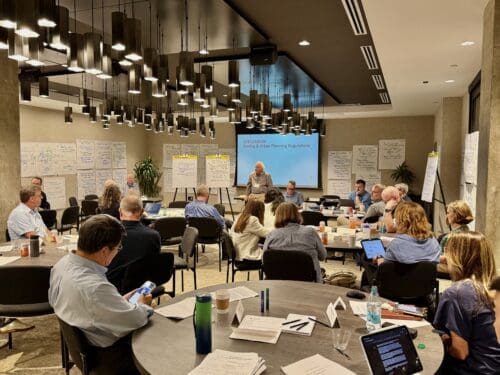
Engineering Change Lab – USA’s recent summit, Transforming the Regulatory System, focused on one important dimension of this shift – the regulatory system of the U.S. for infrastructure, energy, and the environment. Summit participants explored the wicked problem of transformative regulatory reform – going beyond small-scale tweaks and adjustments (common in many regulatory reform efforts) to thinking big about large-scale transformation and the role the engineering community could play leading those efforts.